For most of the summer, the Prittle Brook is barely a trickle as it winds through Belfairs Wood. After a heavy storm it’s a different stream: much higher and heading downhill fast.
Once the brook leaves the wood, it runs into a concrete channel with homes on either side most of the way down. There’s very little room there to hold water back. In the wood, there’s more space. So the idea behind our leaky dams is simple: slow the flow while the water is still among the trees, before it reaches built-up areas.
It’s the most nature-based scheme Southend has tried so far. It’s also a very different kind of council engineering from laying concrete.
From secretary to dam builder
Jane Brockman is an engineer in the project delivery team at Southend-on-Sea City Council. She leads our work in the upper catchment, the higher ground where rain first collects before draining into the brook.
Her route into engineering was not a typical one. She started out as a legal secretary in London. When redundancy came, she took it and joined the council’s active travel team as a cycle mechanic and administrator. By then she had already started an engineering degree with the Open University, and she finished it last year while working her way into the engineering team.
She joined Catchment to Coast in a support role, arranging meetings and handling admin. She was then asked to lead delivery in the upper catchment.
“I like the problem-solving side of it – looking for solutions. There’s got to be a way to solve things.”
Her dad was a toolmaker engineer, and she puts her practical, mechanical streak down to him.
What a leaky dam does
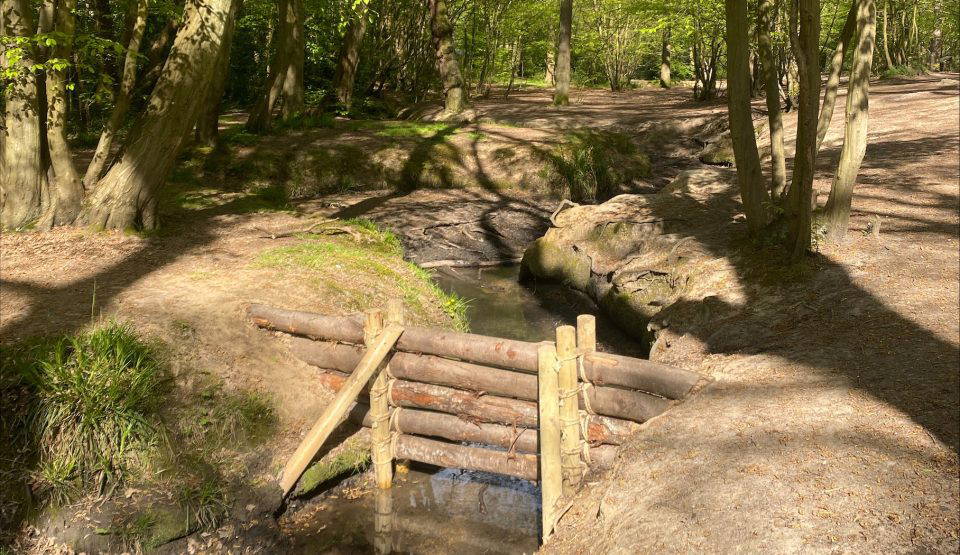
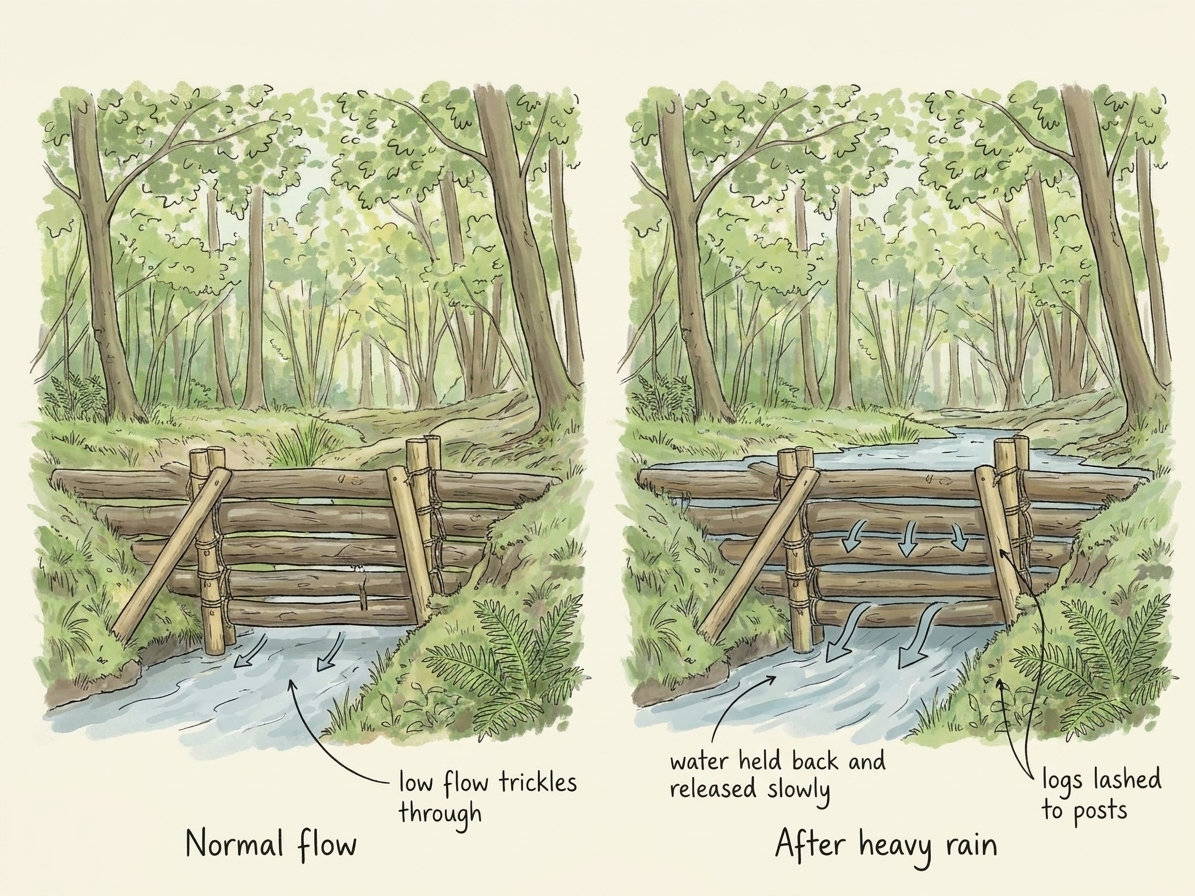
A leaky dam is a barrier placed across a stream. In our case the materials – logs – came from the local area. The name tells you how it works: in normal conditions, water passes freely underneath. When the brook rises after heavy rain, the dam holds some of that water back and releases it more slowly. The result is a lower, later peak downstream.
We’ve built five leaky dams in Belfairs Wood. Jane designed them and visited the site to watch our contractor, Marlborough Highways, install them, without getting too wet and muddy herself.
“Most of our projects are solid engineering – hard stuff. It was good to do something in the woods, a bit more natural. This is probably the most nature-based solution we’ve got in Southend.”
What it took to get permission
Building anything in a stream in an ancient wood is not as simple as banging wood into the ground. It takes a lot of paperwork, and some of it was new to everyone involved.
- Environment Agency permit: the Prittle Brook is classed as a main river, so we needed a permit. That meant flood risk assessments, ecology assessments, detailed designs and method statements explaining how the contractor would do the work. Some of these took a long time.
- We had hoped to use heavy horses to move the timber around the woods but the local contractor ceased trading and we were unable to find a suitable horse-powered alternative.
- Natural England assent: most of Belfairs Wood is a Site of Special Scientific Interest (SSSI), so we needed Natural England’s consent as well.
- Timing: to avoid bird nesting season, all the work had to happen between September and March.
The mycelium dam
A little away from the wooden dams, we built a different kind of dam. It’s made of two rows of hessian sacks filled with wood chip that has mycelium growing through it. Mycelium is the network of fine threads that makes up most of a fungus.
Between them, the two rows hold water back. The water then seeps through the bags, and as it does, the mycelium acts as a living filter. We’re testing whether it improves water quality by measuring nitrates, phosphorus and turbidity (how cloudy the water is with sediment).
The mycelium needs to stay wet to survive. That’s why it sits apart from the leaky dams, in a stretch where water flows all year. It has drawn interest from the Environment Agency, and our contractor’s case study has been widely shared. You can read more about how mycelium filters water in Fungi, filters and floodwater.
Ponds and wet woodland
It’s still early days for our dams. The flow is being monitored and the first signs are that the dams will have an effect during high flows. But a dry summer hasn’t given them much of a test.
“Over the summer there’s barely a trickle in there. In a high storm event it can get quite high.”
The monitoring may already be teaching us something. Following the guidance, we set the dams about 300mm above the brook’s usual level. That may be too high for them to do much except in the biggest storms. Future dams could sit lower so they come into play more often. Monitoring over the coming winter will tell us more.
Some of our initial ideas didn’t make it past the planning stage. The first plan was to let the brook spill onto small floodplains in the wood. Neighbours close to the brook were understandably worried about flooding. An ecology assessment also found that the trees there cope with occasional wetting but not with being wet all the time. A plan to divert water into an old pond and create wet woodland was dropped for the same reason.
Those ideas aren’t necessarily gone for good. In areas that already get wet, we could work with Essex Wildlife Trust and the council’s parks team to change the planting gradually and boost biodiversity.
Where to find the dams
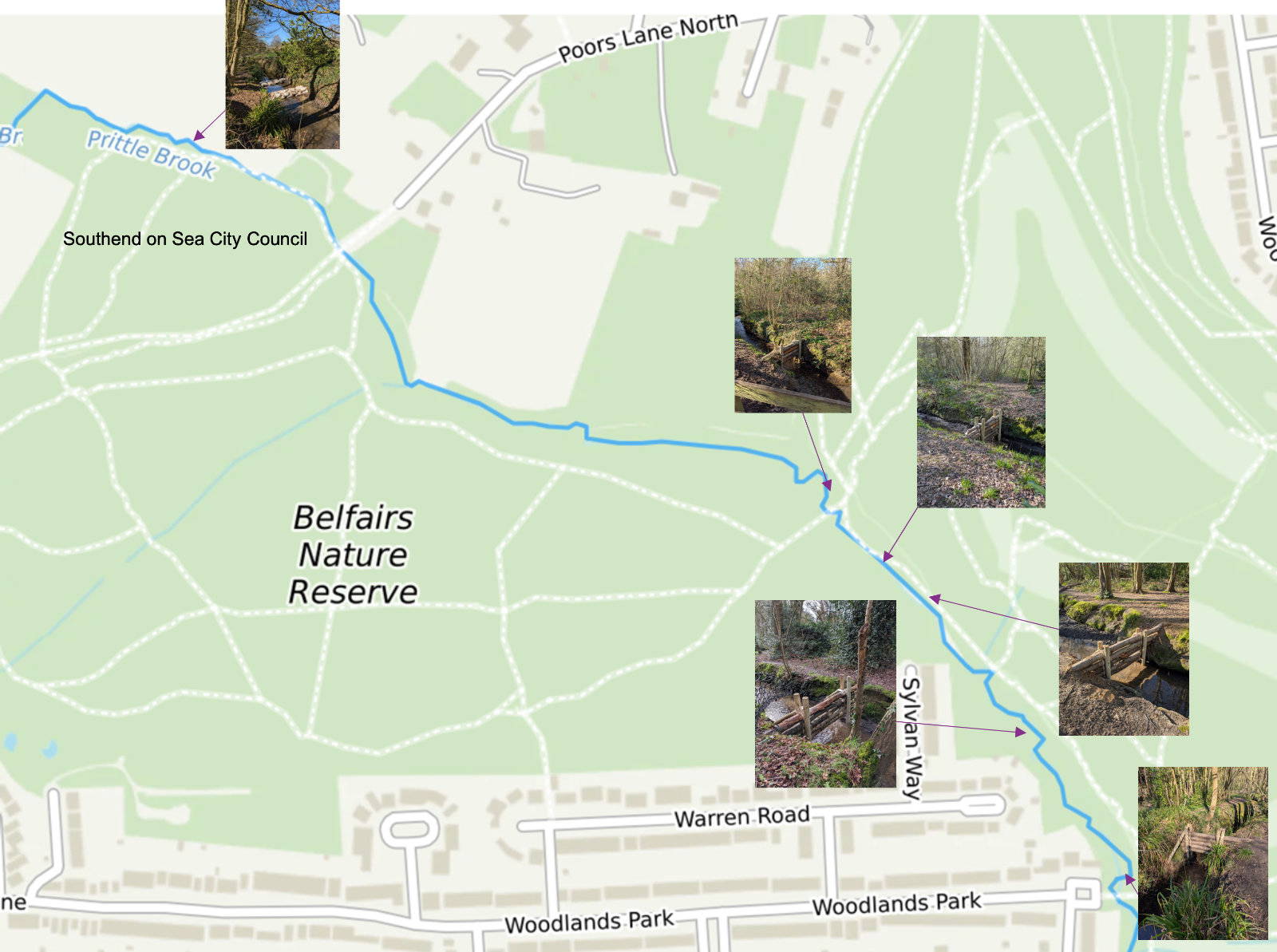
The map below shows the locations of the five leaky dams in Belfairs Wood and also the mycellium dam farther upstream.
Beyond the wood: a roundabout that holds water
Now that the leaky dams are set up in Belfairs Wood, Jane’s next focus in our upper catchment is a roundabout scheme. A roundabout usually rises in a hump. This design turns it upside down into a shallow basin. Kerb drains would carry rainwater off the road and into it, where hydrorocks (underground blocks that store water) and planting would hold it. Some of that water would evaporate, and the plants would help filter the rest.
We’d keep some of the existing gullies, so in very heavy rain the basin could still overflow into the drains. It would just happen later, which gives the system more time to cope. We have a quote for the work and are now confirming the final budget.
What future success looks like
For Jane, success through the Catchment to Coast project means nature-based solutions becoming a normal part of how Southend manages water, not just new gullies. That could look like:
- more rain gardens and basins wherever there’s space for them
- more leaky dams in other watercourses where they’re suitable
- green spaces that are designed to do a job, not just to look nice
Space is the challenge. Southend is densely built up, and you can’t simply take away parking.
“It’s changing people’s mindsets – having grass that does something underneath that you might not necessarily see.”
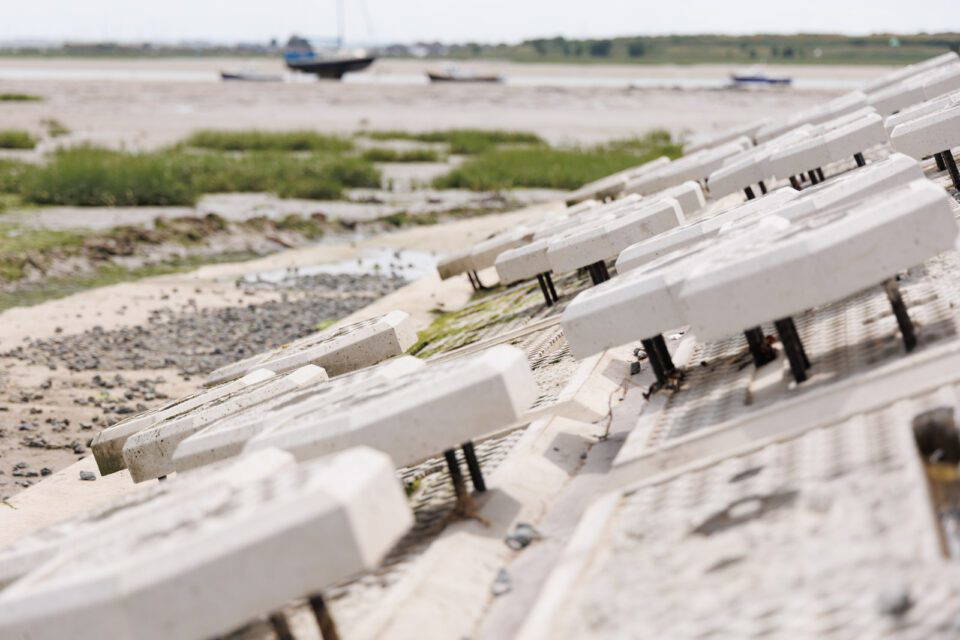
Jane is also looking to the coast. Southend’s shoreline takes a battering and is protected mostly by concrete. She’s keen to explore whether more seagrass could help soften the power of the waves, taking the same nature-based thinking out to sea.
What happens next
Monitoring will continue through the wetter months, and that’s when we’ll learn the most about how the dams perform. We may adjust their height depending on what we find.
Jane sees the freedom to experiment as one of the most valuable parts of Catchment to Coast.
“The whole concept of Catchment to Coast is innovation. It doesn’t necessarily have to have immediate benefits in order to be successful; it’s about testing, learning and iterating.”
We’re learning from what works and from what doesn’t, and we’re sharing all of it so that other councils and engineers can make better decisions about working with nature.
Further reading
- Delivering natural flood management in Belfairs Woods – Marlborough Highways’ case study
- Fungi, filters and floodwater – how mycelium filters water