Clean water rarely comes from one big fix. It comes from lots of smart interventions working together.
In Catchment to Coast, we are trialling one of the more unusual, nature-led possibilities: mycelium – the living, thread-like network that makes up most of a fungus – as a filter for polluted water.
Mycelium: a living network beneath our feet
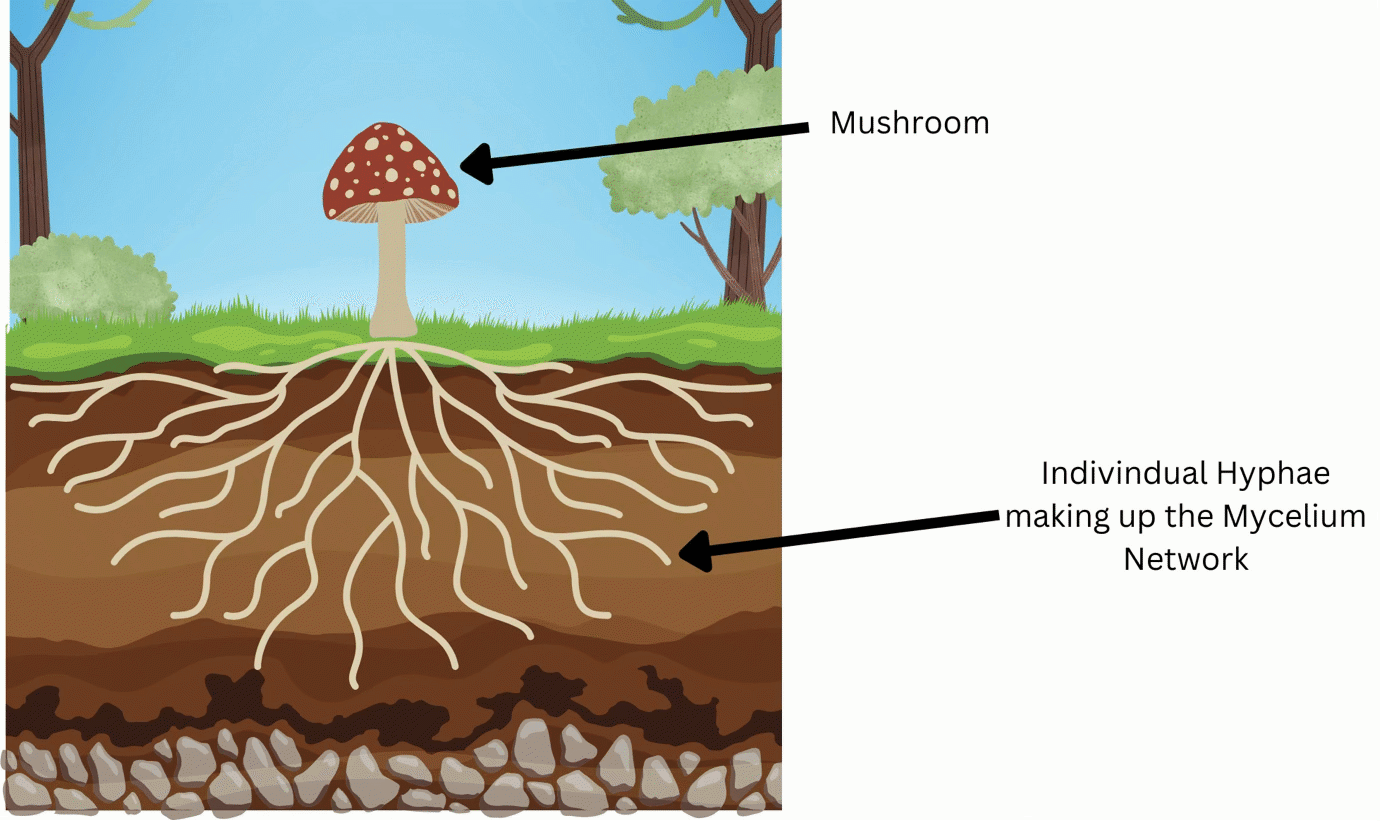
When you spot a fungus on a log or pushing up through the leaf litter, you’re only seeing the visible part of the organism. Mushrooms and fungi are the fruiting bodies – the structure that helps it reproduce.
Some fungal species form organisms larger than a blue whale. Most of that size comes from the mycelium – most of the fungus lives out of sight, as opposed to the small parts you see above ground.
Mycelium is a fine web of microscopic threads, called hyphae, that spreads through soil, wood or other organic material.
In healthy ecosystems, those underground networks do vital work. They help break down dead material, recycle nutrients back into the soil and support the wider web of life.
Why mycelium is interesting for filtering water
Mycelium is not just good at breaking things down. Its structure also makes it a promising candidate for filtration.
In simple terms, mycelium can help in three ways:
- It acts like a mesh. The tangled network of threads can trap and slow down particles suspended in water.
- It creates a biologically active surface. Water flowing through mycelium passes across a living system where microbes and organic matter interact.
- It can help reduce some pollutants. Research suggests mycelium-based filters can improve water quality by reducing certain contaminants, depending on the fungal species used and how the filter is designed.
This kind of approach is sometimes described as mycofiltration – using fungi as living filters.
What it can and cannot do
Mycelium is not a replacement for sewage treatment, and it is not a silver bullet.
It is best thought of as one potential part of a wider toolkit, alongside interventions such as reed beds, ponds and other nature-based solutions.
That is exactly why we are trialling it: to understand where it performs well, how it behaves over time and how it might work in combination with other treatments.
How we are using mycelium at Benfleet
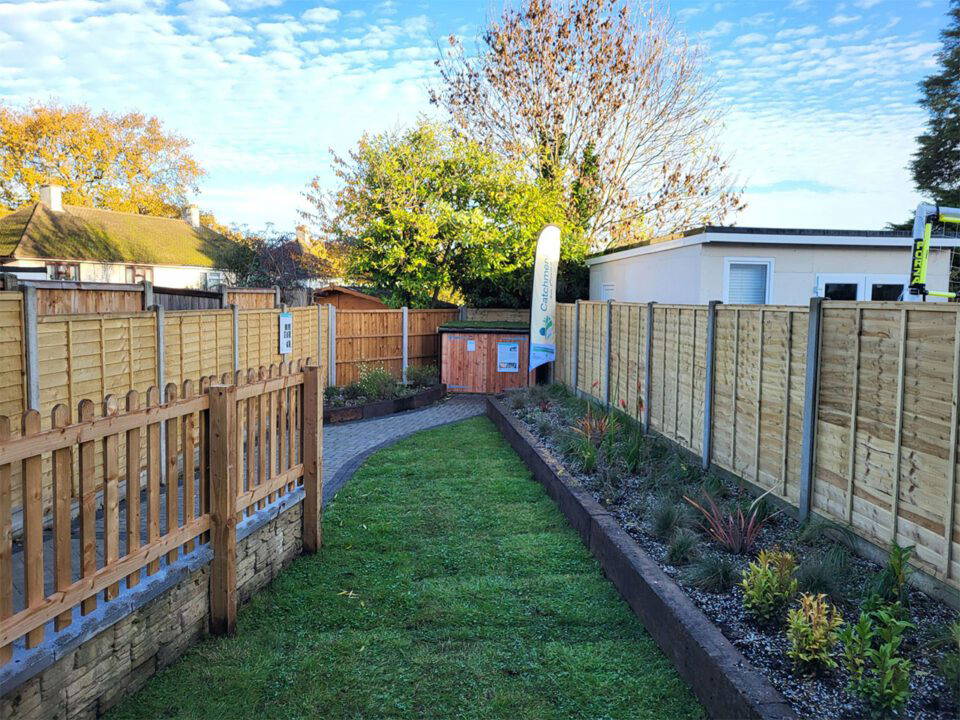
At Benfleet Sewage Treatment Works, we are trialling mycelium as a filter for storm overflow water.
The set-up is simple by design. Polluted water is passed through a mycelium network that has been grown within sawdust, held in a breathable burlap sack. As the water flows through, the mycelium provides a physical and biological filtering layer.
This trial is happening alongside other treatments, including ponds with reed beds and water plants. By testing multiple approaches together, we can compare what works best and explore which combinations might be most effective.
What we are hoping to learn
This trial is about testing and building evidence. We want to understand:
- how well the mycelium filter performs in real-world conditions
- what kinds of improvements we see in water quality
- how long the filter remains effective before it needs replacing
- how it performs alongside other nature-based treatments
What we learn at Benfleet will help us decide whether mycelium filtration could play a useful role elsewhere.
Further reading
Effectiveness of mycofiltration for removal of contaminants from water: a systematic review protocol – Not results, but a roadmap: a protocol for systematically reviewing the evidence on mycofiltration’s ability to remove different contaminants from water and wastewater.
Mycelium: Exploring the hidden dimension of fungi – A brisk, friendly primer from Kew on what mycelium actually does: breaks down dead matter, brokers mycorrhizal partnerships with plant roots and helps pull carbon below ground.
Strange but True: The Largest Organism on Earth Is a Fungus – A Scientific American piece on the Oregon honey fungus (Armillaria ostoyae), which sprawls across roughly 2,400 acres and may be around 2,400 years old.
Underground Networking: The amazing connections beneath your feet – An accessible explainer of the so-called ‘wood wide web’: mycorrhizal networks that move water, nutrients and chemical signals between trees, with older ‘mother trees’ acting as well-connected hubs.
Morphology and mechanics of fungal mycelium – For the materials-science minded: a Scientific Reports paper treating mycelium as a biomaterial, measuring its non-linear behaviour in tension and compression and modelling how density shapes its strength.
Impact of mycofiltration on water quality – A field study from Uttarakhand, India, testing mycelium ‘spent bags’ in fish tanks and reporting improved water quality and lower microbial loads versus standard approaches.
This article was written in collaboration with Lucinda Robinson, a PhD student at the School of Life Sciences, University of Essex.